
Your freedom back. Their education intact.
A year that’s already planned, an optional four hours a week of live mentorship, and nothing watered down. You stop building the week; your child keeps doing real work.
- ✓ The full 30–32 week plan written out — you stop building the week
- ✓ No parent required in the room. No tutoring shift assigned to you.
- ✓ Real rigor. Discussion, writing, logic, rhetoric. Nothing watered down.
- ✓ You stay the parent and the educator of record. Always.
A 15-minute conversation about your child. No pitch, no obligation — and if we’re not the right fit, we’ll say so.

Loving classical education and drowning in it are not a contradiction.
If any of this sounds like your year, you’re in good company — a lot of our families arrived saying exactly this.
The whole day is school
Memory work before breakfast. A reading load that spills into the evening. A community day that needs you there all day, with a toddler on your hip.
You’re the teacher, not the mom
Somewhere between the drills and the grading, the relationship started running through the curriculum. There were tears this year, and not all of them were your child’s.
And you feel guilty saying so
Because when something isn’t working, the answer you keep hearing is to trust the method and push harder. So you’ve stopped mentioning it out loud.
None of that means classical education was the wrong call. It means the delivery you landed in was built around a family with more hours in the day than yours has.
You get your week back. Your child gives up nothing.
“Four hours? What am I giving up?” is the right question to ask, and it deserves a straight answer. What comes out is the busywork. What stays is the part that was always doing the work.
What you get back
- ✓Your week. Four hours, not four days. Afternoons go back to being afternoons.
- ✓Your calendar. No community day you have to attend, no parent shift, no tutoring rotation assigned to you.
- ✓Your authority. Move things, skip things, test your own way. You don’t need anyone’s permission and nobody grades your child but you.
- ✓Your evenings. No planning after bedtime, because the year is already built.
- ✓Your role. You get to be their mother again rather than the one enforcing Latin roots at 4pm.
What doesn’t change
- ✓The great books. Read closely and discussed, not summarized.
- ✓Real writing. Formal essays, arguments they have to defend. Still hard, on purpose.
- ✓Logic and rhetoric taught properly, in sequence, the way the Trivium intends.
- ✓A mentor who pushes. Your child will be asked what they meant, and the first easy answer won’t be accepted.
- ✓The expectation. Your child still has to think. We took the busywork out, not the rigor.
Freedom and rigor were never actually opposed. What made classical education exhausting was never the reading or the discussion — it was copying definitions nobody reads, filling a schedule to make a week look serious, and a parent teaching a subject she never studied because there weren’t enough teachers to go round. Take that out and what’s left is the education you signed up for, in a week you can actually live in.
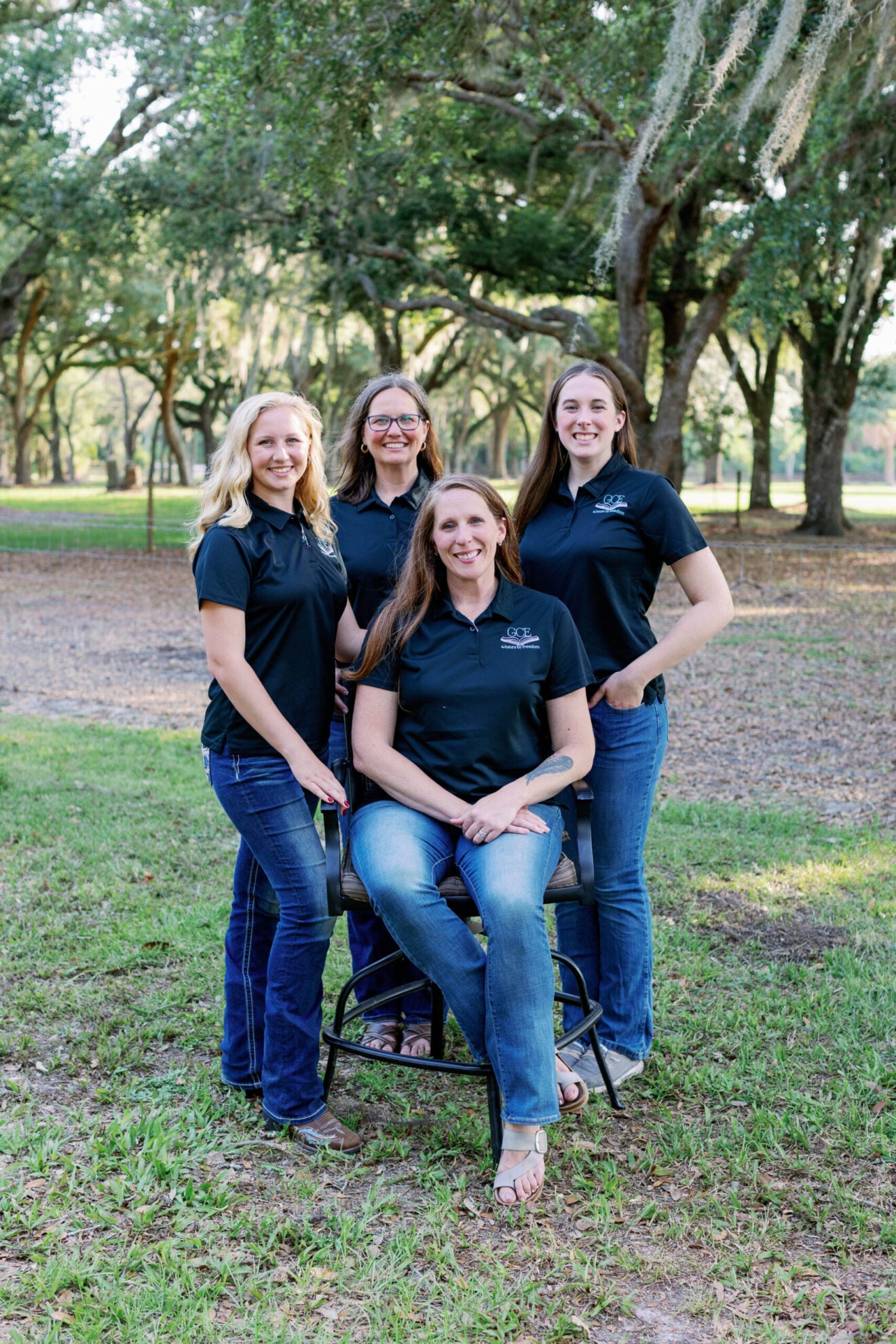
We’re homeschool families too.
Get Classically Educated was founded by two Florida homeschool families, and we’ve grown a team around us since. We taught our own children through this — the grammar years, the arguing years, and the applying-to-college years — and got tired of choosing between an education worth having and a household that actually functions.
We serve families in every state, we’ve graduated seniors through this program, and we’re growing. We’re a Christian company with Christian mentors, though we don’t teach Bible or doctrine as a subject — families who share our faith and families who don’t are both at home here.
Using your Step Up funds
We’re approved for both PEP and Unique Abilities (FES-UA). No reimbursement paperwork, no waiting to be paid back, no guessing whether it counts.
Log in, then click through
Log in to your Step Up account first. Then use the button below to go straight to our Agenda listings in MyScholarShop.
Purchase with your funds
The Agenda and our book bundles are eligible under both PEP and Unique Abilities. Your scholarship pays at checkout.
We set your child up
You’ll get your login, your child’s stage placement, and, if you add live classes, your session times. Then you open week one.
Paying out of pocket? Enroll directly here. Most of our families pay this way, without a scholarship — you get exactly the same Agenda and the same 30-day refund. Paying directly, you can choose the Agenda alone ($1,377) or Agenda + Live Mentorship in one checkout ($1,577).
One thing we want to be straight about.Your scholarship pays for the Agenda and books — that’s what you’re purchasing in MyScholarShop. Live classes are a separate package: $200 a year per student, paid directly to us — never with scholarship funds.
Step Up treats curriculum and live instruction as separate categories, so we keep them in separate packages. Unique Abilities funds work a little differently — bring your scholarship type to the call and we’ll tell you exactly what yours covers.
The Agenda — a weekly to-do list for the whole year
Not a syllabus. Not a stack of books with a reading order. An actual week-by-week plan of what your child does, in what order, for 30 to 32 weeks.
The GCE Agenda
Ages 8–18 · 30–32 weeks · books purchased separately- ✓Literature and the great books — what to read, and what to ask about it
- ✓Writing and composition — the real backbone of the program
- ✓History — taught as a connected story, not disconnected units
- ✓Logic and rhetoric — how to reason, argue, and hold a position
- ✓Hands-on science — real experiments and research, built in
- ✓Weekly assignments and pacing — written out, ready to follow
Price, plainly
$1,377 / year, per student
For the Agenda package · Eligible for Step Up PEP and Unique Abilities
One flat price for the full Agenda and everything that comes with it. Live classes are separate — $200 a year per student, paid directly to us, not with scholarship funds. The Agenda plus live classes comes to $1,577.
Books are a separate purchase and are not part of the $1,377. Expect roughly $50–$400 depending on stage. Our book bundles are also ESA-eligible.
No hidden fees, no per-subject add-ons, no surprise upgrades mid-year.
Full refund within the first 30 days — no fine print.
“I have 2 children in the rhetoric 3 class, 1 in dialectic 1, and 2 children in the grammar classes, and it has been a game changer for us… it is still up to me how we structure our week and there is no guilt if we don’t get to something.”
— Laura T., five students enrolled

A year of decisions off your plate.
Anyone can write a to-do list. What takes years is knowing what a twelve-year-old should read in November, how long it should take, and what question to ask them about it afterward. That’s the part you’re buying.
Illustration of a typical week. There are 30 to 32 more, already built. See a real one free →
Your week, already decided
Six subjects, sequenced and paced across 30–32 weeks so the history lines up with the literature and the writing builds on what came before. Every decision about what, when, and how much is already made — by people who have taught this to their own children. Your child ticks it off as they go.
And a person behind it
A plan on its own is just paper. Yours comes with someone to ask when a week isn’t working, a classroom where your child can get unstuck, and — if you add live classes — a mentor leading discussion every week.
Online to plan, paper to learn
The Agenda lives online so it’s never lost and always current — print any week as a PDF if you prefer. But the reading happens in real books your child holds, marks up, and leaves on the kitchen table.
This is the part parents tell us they didn’t expect. The planning is online so you never lose it. The learning is on paper, with a pencil. Compared with programs where a child sits in front of a screen most of the day, your family’s actual screen time goes down.

And you’re not left alone with it.
Every Agenda family gets the support below at no additional cost. Live classes are there too, as a separate package, if you want them.
A support person
A real human who knows the curriculum and answers when you’re stuck, confused, or wondering if you’re behind. Not a ticket queue.
An online classroom
Where your child can post questions between sessions and get answers — from a mentor and from other students working the same week.
Optional live classes · $200/year
Four hours a week with a mentor and no more than 12 students — about an hour per subject. Paid directly to us. Classes are in session — join any week.More below →
The Agenda starts whenever you do
Self-paced, so there’s no start date to miss and no such thing as behind — begin in August or in February. The live sessions are the one piece that follows a calendar.
The live sessions — and why most families show up
Four hours a week, live with a mentor and no more than 12 students — roughly an hour per subject, with breaks in between. Grammar splits it across two shorter days; Dialectic and Rhetoric meet once a week for the full four. They’re a separate package — $200 a year per student, paid directly to us rather than with scholarship funds. Here’s what happens when your child joins.
Classes are in session — and stay open.
Join in November and your child simply starts at whatever week the group is on.
Someone else asks the hard question
Your child explains what they read, and a mentor doesn’t accept the first easy answer. That push is genuinely hard to do at your own kitchen table — not because you can’t, but because you’re also the person who makes lunch and enforces bedtime.
Discussion is where classical education happens
Reading builds the raw material. Thinking gets sharpened against another mind. A student who has defended a position out loud, to someone who disagrees, learns something a worksheet cannot teach.
Your child is expected somewhere
An adult outside your family notices whether the reading got done and says so. Especially in the middle and high school years, that lands differently than the same reminder from you — through no fault of yours.
They meet the other kids doing the same week
Small enough that they know each other by name. A homeschooled student who is the only one in the house reading The Odyssey finds it changes things to argue about it with someone their own age.
Someone outside your family knows their work
This matters more than it sounds. The common worry in the high school years is that you’re the only one evaluating your child. A mentor who has watched them think all year can speak to their progress — and tell you something specific in March.
You get an hour off the hook
Not the one explaining it, not the one pushing, not the one who has to make them care about Latin roots. Several of our parents say this hour is the part they didn’t expect and wouldn’t give up.
Still — genuinely optional. Some of our families run the Agenda entirely on their own all year, and that’s a completely legitimate way to do this. You only pay for live classes if you add them, and the Agenda works the same either way. Live sessions can’t be rewatched, so a missed week is missed — but your Agenda keeps you exactly on track regardless.
Sessions run on a schedule you choose from several options. All times are Eastern.
“Of all the high school curriculum and co-ops we’ve tried, this one is the best. It lays everything out for both the students and parents so well. The workload isn’t overwhelming and the mentors are TOP NOTCH.”Janelle J. — Rhetoric 3 parent, second year with GCE

What a week really looks like — and what you actually do
You should know what’s left on your plate before you buy, not after.
Monday, you open the plan
The week is already built. You read what’s assigned, hand it to your child, and go make coffee. No deciding, no designing, no lesson planning. Ten minutes.
Your child works through it
Grammar-stage students often finish in one to two focused hours a day. Even high schoolers cap around four. Younger children need you nearby; by the teen years most work independently.
You keep the final say
We don’t grade your child — you do, however you want to, or not at all. Nobody here evaluates your student or holds them to our standard. You make sure the work gets done, and you decide what “done” means.
And you stay in control of all of it. Your schedule, your pace, your call. If a week goes sideways, you move things. If your child hates one book, skip it. If you’d rather test them your own way, do that — we don’t assign grades or hold your student to our standard. You keep every bit of the freedom you started homeschooling for. We just stopped making you build it alone.
Or download a free sample week and read the actual assignments first.
What’s not in the box
You should know this before you book a call, not after.
Not included
- ✗Math. We don’t teach it. Keep whatever math already works for your family — and if you’re still hunting, we’re glad to suggest options on the call.
- ✗Books. Roughly $50–$400 per student depending on stage. Our bundles are ESA-eligible.
- ✗Accreditation. You remain the educator of record and keep control of credits and transcripts.
- ✗Foreign language beyond what’s built into the classical coursework.
Worth knowing
- ✓Sessions are capped at 12 students. When a level fills we open another section rather than packing more chairs in.
- ✓All session times are Eastern. You pick your preferred day and time from several options.
- ✓Mentors are not certified teachers — that’s deliberate. They lead discussion rather than lecture.
- ✓We don’t grade your student. You do, if and how you want to. Your homeschool, your standard.
- ✓Live sessions can’t be rewatched. Miss one and you rejoin the next; your Agenda keeps you on track.
So is this our whole homeschool, or an add-on? Think of it as your core curriculum — everything but math. Literature, writing, history, logic, rhetoric and science are all here, planned for you. You add math and keep whatever extras your family loves.
One thing to be clear about: GCE is not accredited, and enrolling doesn’t replace your home education registration with the state. You remain the educator of record and keep control of credits, transcripts and your annual evaluation.
Thirty-two weeks, already mapped.
You have built a year plan before. This is the one you don’t have to build.
The scope and sequence
Whether you’ve done this for ten years or ten weeks, here’s exactly what each stage covers and how the sessions are structured. Nothing hidden behind a sales call.
Ages 8–11
Subjects covered
What the year builds
Foundations — the raw material everything later depends on. Students absorb knowledge, build attention and follow-through, and start meeting real literature rather than reading programs about reading. Science is hands-on: things to build, mix, and observe, not chapters to summarize.
Ages 12–13
Subjects covered
What the year builds
The bridge between elementary work and the kind of thinking high school will ask for. Students read primary and secondary sources, learn to identify logical fallacies, and construct written arguments they have to defend out loud. This is the year a child stops absorbing information and starts interrogating it.
Ages 14–18
Subjects covered
Texts and topics include
Aristotle, Augustine, C.S. Lewis, primary source historical documents, persuasion theory, and advanced composition. Students write formal essays and persuasive arguments, then defend them in seminar — the work that carries into a college classroom without a gear change.
And this is why books run $50 to $400. A Grammar year uses a handful of shorter books and consumables. A Rhetoric year means a stack of full-length primary texts — Aristotle, Augustine, history documents — and simply more of them. The older your student, the more they read, and the more the shelf costs. Our book bundles are ESA-eligible, and many titles are ones families keep and reuse with younger siblings.
We place your child by where they actually are, not strictly by birthday. We’ll sort that out on the call.
How this is different from the other three options
You’re probably weighing us against a few things. Here’s the honest contrast — including where the others might genuinely suit you better.
vs. a community-based program
Those meet in person, which is a real benefit — and they usually require a parent on site all day, often tutoring. If you have a toddler, a job, or a full week already, that’s the part that breaks.
Here, your child attends. You don’t. No parent shift, no tutoring rotation, no full day gone.
vs. a self-paced video course
Cheaper, and genuinely fine for a self-motivated student. But your child watches a screen alone, and nobody notices when they stop thinking and start clicking.
Here the reading is in real books and the discussion is live with a person who knows their name.
vs. buying a boxed curriculum
The honest one. You can buy good classical curriculum for less and run it yourself — plenty of families do it well.
What you’re paying us for is the year already sequenced, someone to ask when it isn’t working, and a mentor who holds your child accountable so you don’t have to be the only one.
If what you need is a box of books and you have the time to build the year yourself, buy the box. We mean that. What we sell is the planning, the support, and someone outside your household expecting your child to show up ready. If those three are what’s missing, this is worth it. If they’re not, it isn’t.

Is it the method, the season, or this particular child?
If classical isn’t working right now, it’s worth asking why out loud — and you shouldn’t have to feel disloyal for asking. Sometimes the method is right and the delivery is wrong. Sometimes it’s the year your child is having. Pick their stage and we’ll send you an honest way to tell the difference.
Just your name and email. We’ll send the guide and a few genuinely useful follow-ups. Unsubscribe whenever.
What switching families ask us

Still deciding? These are the questions families actually ask us.
Can I really use my Step Up funds for this?
Yes — we’re approved for both PEP and Unique Abilities (FES-UA). The Agenda and our book bundles are instructional materials, which is exactly what the Curriculum category is for.
The live weekly sessions are where the two programs differ, and we want to be straight with you. Under PEP, live online instruction sits in a separate category from curriculum, so we sell live classes as their own package — $200 a year per student, paid directly to us, never through your scholarship. Unique Abilities funds are governed by their own purchasing guide and treat online classes somewhat differently.
Bring your scholarship type to the discovery call and we’ll tell you precisely what yours covers, rather than you having to work it out from a handbook.
What does the $1,377 actually pay for?
The Agenda — a complete 30 to 32 week plan across six subjects, sequenced so the history lines up with the literature and the writing builds on what came before — plus the support that comes with it.
For context: comparable classical curriculum packages generally run somewhere between $1,000 and $1,800 a year. At $1,377 you’re paying a normal price for the curriculum, the teaching support, and a mentor to ask all year. Live classes are a separate $200 if you want them.
We keep live classes at $200 because families who use them stay, and we’d rather you finish the year than quit in November.
What if we start and it isn’t working?
You can get a full refund within the first 30 days. Not a credit, not a prorated partial — your money back. We’d rather you find that out in September than resent us in February.
How much of this lands on me every week?
What goes away is the planning — roughly ten minutes reading the week instead of hours building it. What stays is being their mom: making sure your child sits down and does the work.
To be clear, we don’t grade your student. You grade, or test, or don’t — entirely your call. We’re not evaluating your child or holding them to our standard, and you never have to justify your choices to us. Younger children still need you nearby while they work; by the teen years most run the Agenda themselves.
Can we join after the school year has started?
Yes, any time. How it works depends on which part you’re using.
The Agenda has no start date. It’s self-paced, so you begin at week one whenever you begin — in September, in November, in February. You are not behind, because there is nothing to be behind of.
The live classes run on the school calendar and opened August 24 — but you’re not locked out. Join in November and the group might be around week ten; your child simply starts there. Some families jump straight into the current discussion; others work through the earlier weeks at home first and join once they’ve caught up. Either is normal, and we’ll help you decide which suits your child on the call.
Does the Agenda actually work without the live sessions?
Yes, and some families run it that way all year by choice. The Agenda is a weekly to-do list, not a class syllabus — it tells you what to read, what to write, and what to do, in order. It doesn’t assume a mentor filled in the gaps.
Download the free sample week and judge it yourself rather than taking our word for it.
How small are the sessions, how long, and when do they meet?
Never more than 12 students, and grouped by stage — your 13-year-old isn’t sitting in a seminar with 17-year-olds. When a level fills, we open another section rather than packing more chairs in.
Four hours a week at every stage — roughly an hour per subject, with breaks between. What changes is how it’s split. Grammar meets twice a week for two hours each, because eight-year-olds do better in shorter stretches. Dialectic and Rhetoric meet once a week for the full four, which suits older students and keeps the rest of your week clear.
You pick your preferred day and time from several options. All times are Eastern. If the slot you choose doesn’t fill, we’ll come back with another and work around your availability rather than assigning you something.
Is this just more screen time?
It’s almost certainly less than what you’re comparing it to. The Agenda is a planning tool, not a place your child sits — the reading and writing happen in physical books, on paper. The only screen time is the optional live session: four hours a week, total.
Is GCE a Christian program?
Yes — GCE is Christian-founded and our mentors are Christians. Faith isn’t forced into every lesson, but our values shape how we teach, how we treat students, and what we think an education is ultimately for. Questions of character, morality, and doing what’s right are never off the table.
We don’t offer formal Bible classes. The one place scripture is engaged directly is Rhetoric 3 and 4, where students explore leadership and conflict resolution through a scriptural lens.
Families who share our faith and families who don’t are both genuinely welcome here.
Will this count for college?
Here’s the straight version: GCE is not accredited, and enrolling doesn’t replace your home education registration with the state. You remain the educator of record — which is how the large majority of Florida homeschool families already operate — so you keep full control of credits, transcripts, and meeting your state’s requirements.
What changes is that an outside mentor knows your child’s work and can speak to it, instead of you being their only evaluator. Colleges accept homeschooled students routinely; what they want is clarity and consistency, and we help you produce it.
Who are the mentors?
We call them mentors rather than teachers deliberately: they are not state-certified classroom teachers. They’re adults who know this material well and know how to lead students through a hard text — asking the next question rather than delivering a lecture.
Ask about your specific mentor on the call. We’ll tell you who would be leading your child’s sessions and what they bring to it.
We’re mid-year in another program. Can we switch?
Families join us from other classical programs regularly — it’s the most common conversation we have on discovery calls. The Agenda is self-paced, so you can start it the day you buy it regardless of where your current program is.
Bring where your child actually is and we’ll talk honestly about placement and timing, including whether waiting for a natural break would serve them better. We’d rather tell you to wait until January than take your money in October.
Do I have to be in the room? Do I have to tutor?
No, and no. Your child attends the session; you don’t. There’s no parent shift, no tutoring rotation, and no requirement that you master the material first. That’s a deliberate design choice rather than an oversight — it’s the single thing switching families tell us made the difference.
I have more than one child. Does that work?
Very common here — plenty of our families have children in two or three stages at once. Pricing is per student, and we’ll help you sort out scheduling across ages on the call so it actually fits your week.
What parents say once they’re in
“My son started GCE this year. He is 15 and it has been a great transition for us. He likes that he can be more independent since each week is clearly laid out. He really enjoys the weekly in-class Zoom meetings with his mentor and fellow classmates. It has been a challenge for him but it also has been a great learning experience compared to the past 2 years.”
— Alica S., Rhetoric 1 parent
“They provide an agenda with instruction and good discussion in the classes, but it is still up to me how we structure our week and there is no guilt if we don’t get to something or change something to fit us. I am grateful that they have come alongside me in my homeschool journey!!”
— Laura T., five students enrolled
Have a 15-minute conversation about your child.
Tell us their age, what’s working, and what isn’t. We’ll tell you honestly whether this is a fit — and if it isn’t, we’ll point you somewhere better. No pressure, no pitch.
Live classes are in session — join any week. The Agenda you can start any time.