Know your level? Go straight there:
Grammar 1Grammar 2Grammar 3Dialectic 1Dialectic 2Rhetoric 1Rhetoric 2Rhetoric 3Rhetoric 4Already enrolled? Sign in to your dashboard
For scholarship & ESA families · Ages 8–18
Your child’s whole year, already planned.
And you’re not left to teach it alone.
Whether you found us through your scholarship marketplace or a friend, here’s the honest version of what’s behind the listing. The GCE Agenda is a 30–32-week classical homeschool plan (30 weeks for Grammar, 32 for Dialectic and Rhetoric) — four subject blocks, one weekly to-do list your child checks off — plus the teaching notes, questions and answers you need to actually run it at your own kitchen table.
$1,377 for one year of access. Eligible for scholarship and ESA funds.
Full refund within the first 30 days. Live mentorship is a separate $200 add-on — here’s why.

- Built by two homeschool families
- Ages 8–18, Grammar through Rhetoric
- Four subject blocks, 30–32 weeks
- You stay the educator of record
- 30-day full refund
Start here
Choose your student’s level.
Every level comes three ways. Scholarship and ESA funds cover Independent Scholar (The Agenda) — pick that option on the next page and enter code SCHOLARSHIP at checkout. Want live mentorship later? Let us know and we’ll set it up for you. New to us? Keep scrolling — everything you’d want to know is below.
Not sure which level fits? A fifteen-minute call sorts it out faster than any placement quiz — book one here.
Who you’d be trusting
You’ve probably never heard of us. That’s fair.
We’re not a publishing house. We’re two Florida homeschool families who got tired of building a year out of six different catalogs every August — and tired of being the teacher, the grader, the scheduler and the mom all at the same time.
So we built the plan we wanted for our own kids. Other families asked for it. That’s the whole origin story. We’ve since walked seniors all the way through to graduation, and we now serve families in every state — but we started at a kitchen table that looked a lot like yours.
Christian-founded, with Christian mentors. Families of all faiths are welcome and always have been.
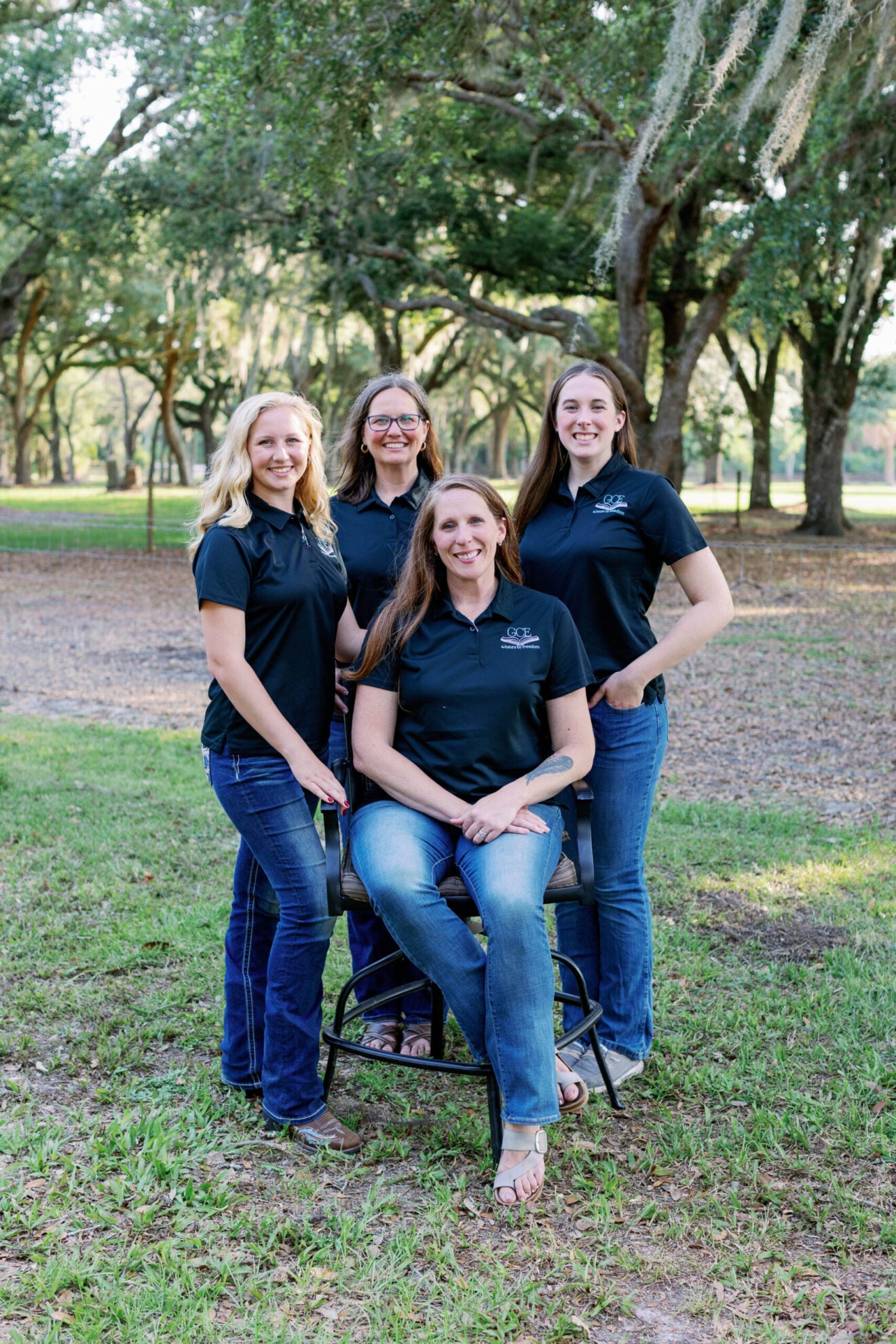
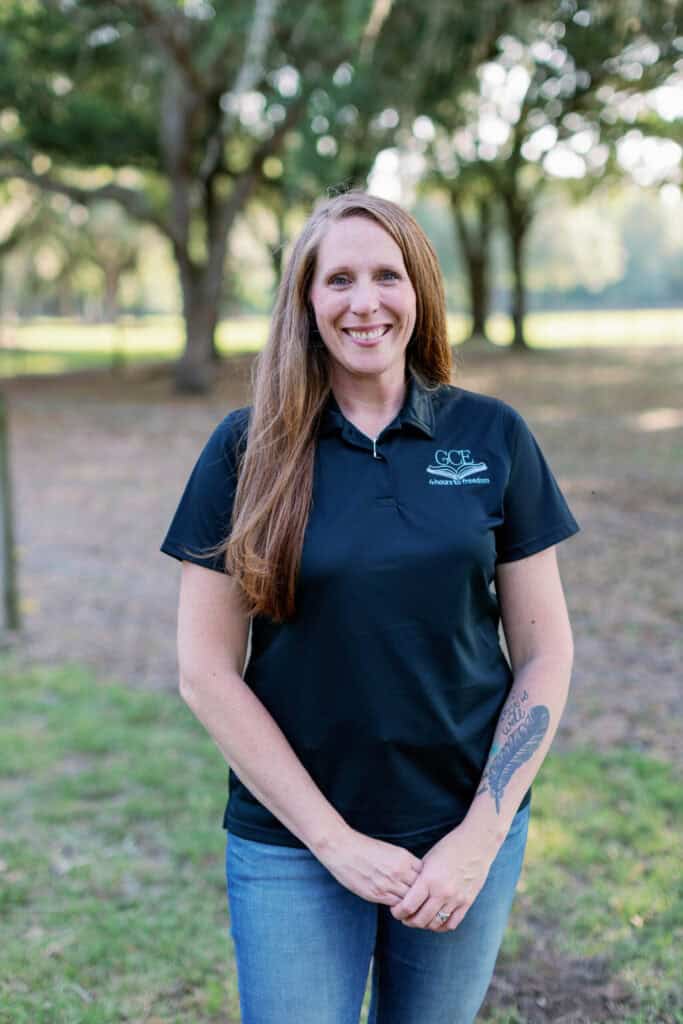
Bonnye McCoy
Lead Classical Educator. Master’s in Education, 20+ years teaching, nearly a decade in classical.
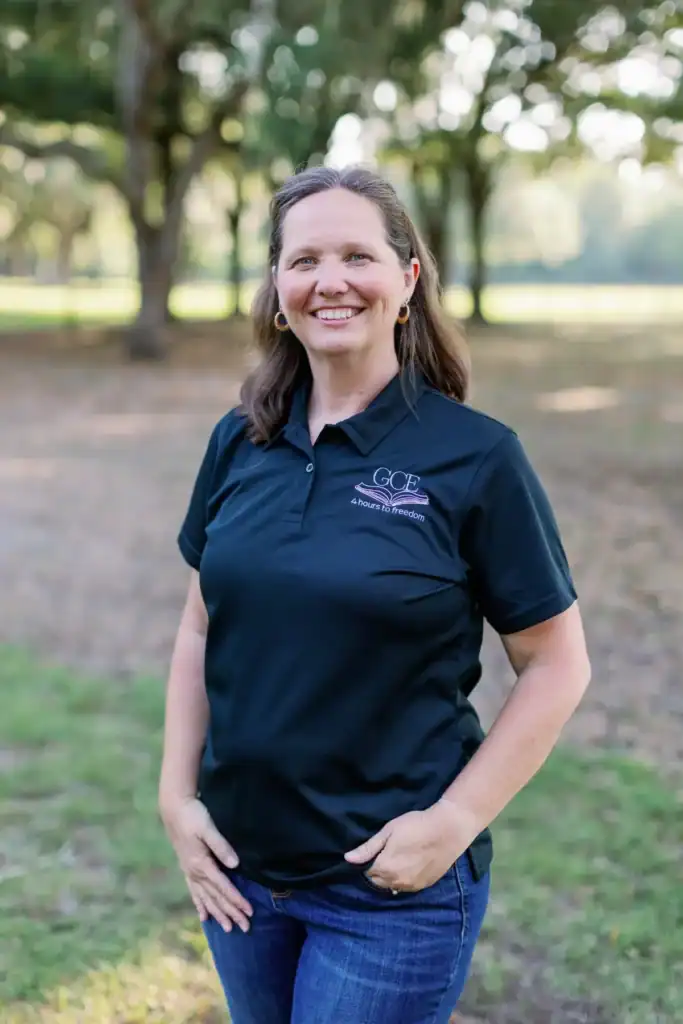
Stacey Thomas
Operations & Academic Support Director. Nearly 20 years in education, five in classical instruction.

Vallorie Thomas
Student Leadership & Communication Mentor. Business degree, currently at the University of Central Florida.

Ava McCoy
Program Coordinator & Classical Instructor. Studying business, with a background in performing arts.
What you’re actually buying
It’s a plan, not a box of books.
The Agenda is a weekly to-do list that runs the whole school year — 30 weeks for Grammar, 32 for Dialectic and Rhetoric — across four subject blocks. Your child opens it, sees exactly what to do that day, and checks it off. You can use it online or print the whole thing as a PDF.
Checkable online, printable on paper
Use it on a screen or print the year. Your child ticks off the day; you can see at a glance where they are.
Start when you’re ready
Your Agenda stays open for one full year from the day you buy it. Buy it in September, start in October, take two weeks off at Christmas — it waits for you. Live classes, if you add them, run through the school year.
Real books in real hands
The plan lives online; the reading doesn’t. Most families find their child’s screen time goes down, not up.





The other half of what you pay for
And how to teach it — because a plan you don’t know how to use is just a PDF.
This is the part most curriculum leaves out and then quietly blames you for. Classical education asks good questions. If nobody has told you what the good questions are, the whole thing collapses into “did you finish the reading?”
So every week of the Agenda comes with the teaching side built in:
- Weekly teaching notes — what this reading is for, and what your child is supposed to walk away with.
- Discussion questions already written — and what a good answer sounds like, so you know when you’ve got one.
- What to cut when the week goes sideways — because some weeks go sideways.
- A real person to email — a named support contact, not a ticket queue.
- The online classroom — materials, resources and your child’s plan in one place.
You don’t have to have read the book first. You don’t have to have been classically educated yourself. Most of our parents weren’t.
No surprises
What a week actually looks like
A Dialectic week, roughly. Grammar is lighter, Rhetoric is heavier — but the shape is the same: they open the plan, they work, you’re in the next room.
- History reading + timeline entry
- Literature: chapters 1–3
- Logic exercise set A
- Literature: chapters 4–6
- Writing: thesis sentence
- Vocabulary from the reading
- Science: the week’s experiment
- Lab notes written up
- History: primary source
- Writing: full draft
- Logic exercise set B
- Literature: finish the book
- Revise and read aloud
- Narration or discussion
- Catch up on anything missed
How long it actually takes
Grammar (ages 8–11): 1–2 hours a day.
Dialectic (12–13): 2–3 hours a day.
Rhetoric (14–18): about 4 hours a day.
That’s independent work — separate from any live class.
And your job?
Be findable. Read the teaching note before dinner if you want to talk about it. Grade it however you like, or don’t — we don’t grade, and you’re not obligated to either.
One parent put it best: “No guilt if we don’t get to something.”
Price, plainly
Two separate packages. On purpose.
The Agenda is the curriculum — that’s the piece scholarship and ESA funds pay for. Live mentorship is its own thing, paid directly by your family. Here’s exactly what each one costs and how each one is paid for.
The GCE Agenda
A full school year (30–32 weeks), plus everything you need to teach it at home.
- 30–32 weeks across four subject blocks, week by week
- Checkable online, printable as a PDF
- Weekly teaching notes written for the parent
- Discussion questions, with what a good answer sounds like
- Access to the online classroom and materials
- A named support person you can email
- Start any time — one full year of access
- Full refund within 30 days
Live Mentorship
Four hours a week with a mentor and eleven other students.
- 4 hours of live instruction per week
- Capped at 12 students, grouped by stage
- Mentor-led discussion — your child talks, a lot
- Several day and time options, all Eastern
- Sessions run continuously — join any week
- Live sessions aren’t available to review or rewatch
- Want a second live day? Honors Scholar adds the Table for $200 + the Table fee
Why two purchases instead of one? Scholarship programs generally keep curriculum and live instruction in separate categories, so we keep them in separate purchases. The Agenda is the curriculum purchase and it stands completely on its own — a full year’s plan, whether or not you ever join a live session. Live mentorship is bought directly from us, out of pocket, as its own thing.
No bundling, no fine print. If someone tells you a program will run your scholarship funds through for live instruction, that should worry you — not reassure you.
One more honest line item: books
Books are not included. Expect roughly $50–$400 for the year depending on your child’s stage. You can source them yourself — libraries and used copies work fine — or buy our book bundle, which is also eligible for scholarship and ESA funds.
The $200 package, explained
Twelve students. One mentor. A conversation you don’t have to lead.
The Agenda is a complete year on its own. Most families add the live classes anyway, and this is why: once a week, somebody else asks your child the hard question. Somebody else waits through the awkward silence. Somebody else says “okay — but why do you think that?”
You get to be their mother that day. Not their teacher.
Four hours a week, grouped by stage. Grammar meets two days for two hours; Dialectic and Rhetoric meet one day for four, with breaks and about an hour per subject. Sessions cap at twelve and we open a new section when one fills.
Live sessions aren’t available to review or rewatch — that’s deliberate. Twelve-year-olds say what they actually think when they’re not being filmed. It does mean the day you pick matters, and it means a missed week is missed.
Live sessions run continuously. Join any week, at whatever week the group is on. Already bought the Agenda and want to add live classes? Email us and we’ll make the switch for you.


A mentor on the screen. A pencil in their hand. That’s the whole design.
The honest version
What’s not in the box
Every program has a list like this. Most of them make you find it out yourself in November.
No math
Keep the math program you have. We don’t touch it.
We don’t grade
You grade and test however you want, or not at all. Your portfolio, your call.
Not accredited
You remain the educator of record. In most states that’s exactly how home education already works.
Books not included
$50–$400 a year depending on stage. Bundles available, ESA-eligible.
The question underneath all the other questions
“But will this actually count?”
It’s the fear that sharpens every year your child gets closer to sixteen, and you deserve a straight answer rather than a brochure one.
As a homeschool family, you are the educator of record. You handle whatever your state asks for — a notice of intent, a portfolio, an annual evaluation. That doesn’t change when you enroll with us, and it wouldn’t change with any non-accredited program. What changes is that you now have 30–32 documented weeks of coursework across four subject blocks, with work samples your evaluator can actually look at.
As for college and career — the pitch for classical education used to be “it’s rigorous.” The better argument now is narrower: the skills being automated fastest are the ones classical education never centred on. Summarising, formatting, retrieving a fact — a machine does those. Reading something difficult and deciding whether it’s true, then defending that in front of eleven people who might disagree, is exactly what we spend four hours a week doing.
If you want to talk about your specific child and your specific plan for high school, that’s what the free call is for. No pitch.

From families who started where you are
What parents say once they’re in
“Our family is so blessed to have found GCE. They provide an agenda with instruction and good discussion in the classes, but it is still up to me how we structure our week.”
— Laura T.
“My son started GCE this year. He is 15 and it has been a great transition for us. He really enjoys the weekly in-class Zoom meetings.”
— Alica S., Rhetoric 1 parent
“This is my daughter’s 2nd year doing GCE and we are loving it. The mentors are TOP NOTCH!”
— Janelle J., Rhetoric 3 parent

What parents love most

On the fence? Advice from GCE parents

What changed after GCE
Free download
Not sure yet? Take a week of it home.
A real week from the Agenda — the plan, the reading, the teaching notes, the discussion questions. Print it, run it with your child, and see how it actually feels at your table before you spend a dollar.
Get the free sample week
Honest answers
Questions scholarship families ask us
Can I really use my scholarship funds for this?
Yes — the GCE Agenda is curriculum, and that’s the purchase scholarship and ESA programs cover. Our book bundles are eligible too. The $200 live mentorship add-on is not bought with scholarship funds; it’s paid directly to us.
How does the purchase actually work?
Two ways. If your program has a marketplace we’re listed in, buy the Agenda there and the program pays us directly on its own schedule. If it doesn’t, or you don’t want to wait, enroll right here: pick your level below, choose Independent Scholar, and enter code SCHOLARSHIP at checkout. You’ll get your online classroom and the full Agenda right away while your funds process.
Why can’t I put the live classes on my scholarship too?
Because most programs treat live online instruction as a different category from curriculum — often limited to an approved provider list — and we don’t pretend otherwise. The Agenda is the curriculum purchase; live mentorship is a separate $200 you pay directly to us. Keeping those clean protects your funds as much as it protects us.
What if my remaining balance doesn’t cover $1,377?
Talk to us. Get on a call and we’ll look at what you’ve got left and what makes sense — including starting with just the Agenda and adding books later, or splitting the purchase between your funds and a card.
We start, and it turns out not to fit. Then what?
Full refund within the first 30 days, no argument. If you paid with scholarship funds, the refund follows your program’s own process for returned purchases — email us and we’ll walk you through exactly what happens.
When can we start? Have we already missed it?
No. The Agenda has no start date — buy it today, start Monday, start in January. You have one full year of access from the day you buy it. Live sessions run continuously; you join whichever week the group is currently on. Nobody catches you up on what you missed, and nobody makes you feel bad about it.
How much of this lands on me?
Less than you think, and it’s specific: read the weekly teaching note, be available while they work, and decide how you want to grade — if you want to grade. You are not lesson planning. You are not researching what comes next. You are not the one running the discussion.
My child is behind. Or ahead. Or both, in different subjects.
Very normal. We group by stage — Grammar 8–11, Dialectic 12–13, Rhetoric 14–18 — but stage is about where a child is, not what year they were born. A fifteen-minute call sorts this out faster than any placement quiz.
How religious is it?
We’re Christian-founded and our mentors are Christian. The Agenda is a classical liberal arts program, not a Bible curriculum, and families of every faith and none are in our classes right now and always have been.
Which scholarship programs does this work with?
Any program that funds homeschool curriculum — state ESAs, education scholarship accounts, and marketplace-style programs like Florida’s Step Up For Students, where you’ll find us in MyScholarShop. Rules differ from program to program, so if you’re not sure, send us the name of yours and we’ll tell you straight. And if you don’t have a scholarship at all, you’re just as welcome — most of our families pay directly, and there’s a website special waiting on every level page.
Two ways to start
Buy it today, or ask us anything first.
Both are fine. Nobody here is going to chase you.
Live mentorship is a separate $200 add-on, paid directly to GCE. Full refund within 30 days.